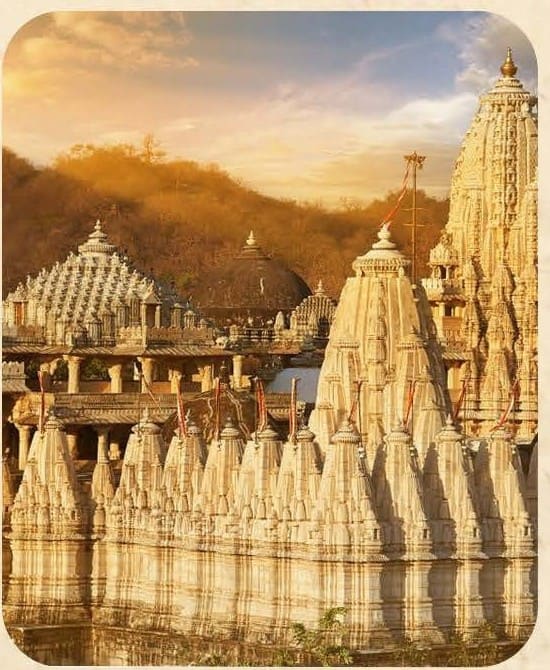
 01
01Ranakpur
Rajasthan Tourism dates the Jain temple complex to the 15th century and places it in an Aravalli valley. Its account connects the project to the merchant Dhanna Shah of Ghanerao and the patronage of Rana Kumbha.
 Ghanerao Royal CastleA boutique heritage hotel · Estd. 1606Book your stay↗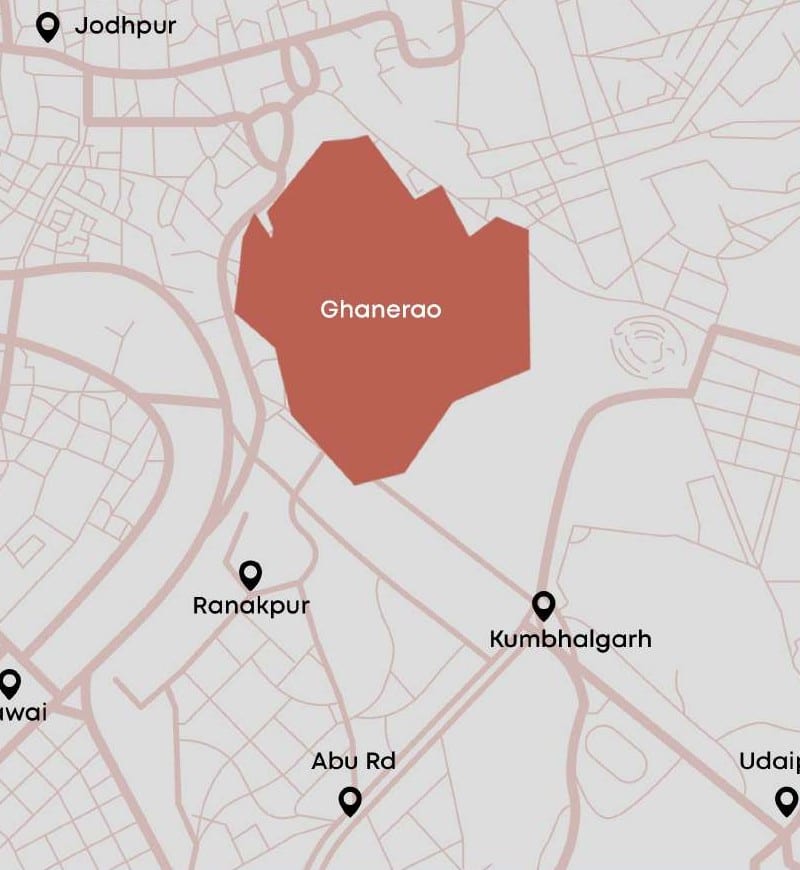
GHANERAO & THE REGION
A village in the Aravalli landscape, shaped by old routes, sacred places, courtly art and the meeting of two historic regions.
WHY GHANERAO
Ghanerao grew at one of the Aravalli passes linking the historic territories of Mewar and Marwar.
A Government of India tourism study records the Ghanerao estate as founded in 1606 by Gopal Das Rathore of the Mertia clan. It describes a former estate of 37 villages and a place where painters connected with the courts of Jodhpur, Mewar and Bikaner settled and worked.
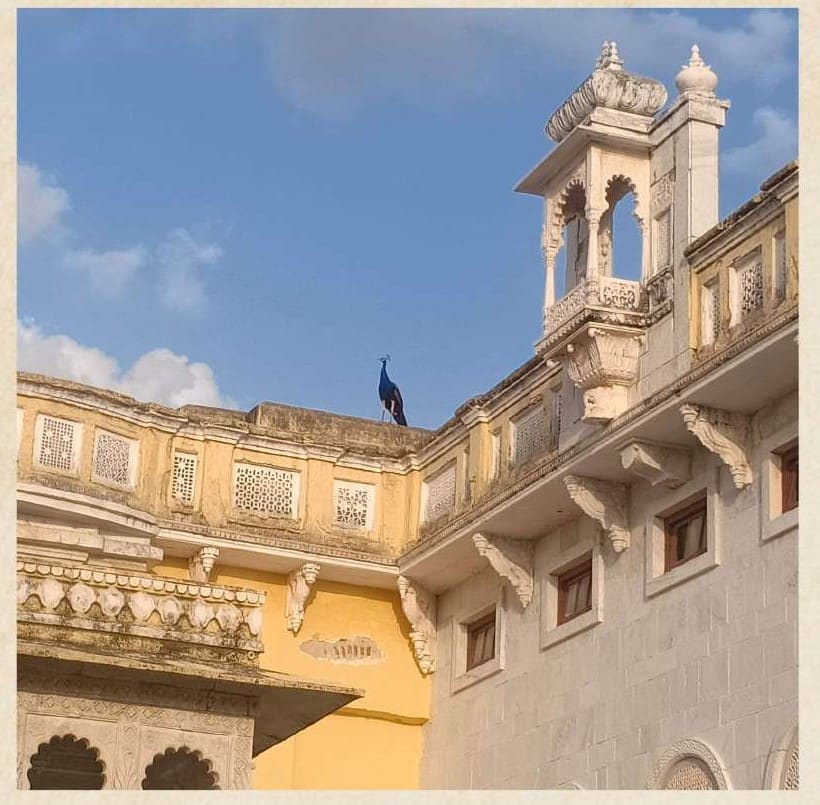
THE RAWLA
The castle is a rawla: a noble family residence that has developed over generations. Recent academic research focuses on its early-19th-century Sheesh Mahal, where painted glass miniatures and earlier decorative layers preserve a complex interior history.
Enter the castle →THE WIDER CIRCUIT
Use Ghanerao as a slower base. Route conditions, opening hours, permits and seasonal availability can change; reservations can help shape the current journey.
01Rajasthan Tourism dates the Jain temple complex to the 15th century and places it in an Aravalli valley. Its account connects the project to the merchant Dhanna Shah of Ghanerao and the patronage of Rana Kumbha.
 02
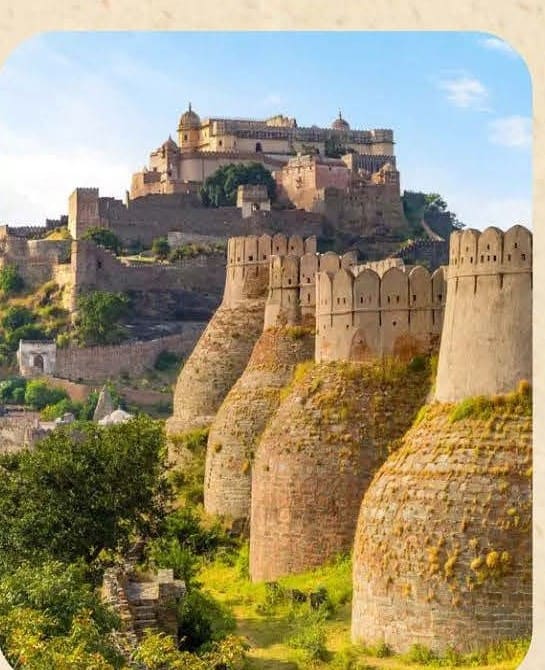
02One of UNESCO’s six Hill Forts of Rajasthan, Kumbhalgarh used the high Aravalli terrain as part of its defence and controlled a historic crossing between Mewar and Marwar.
 03
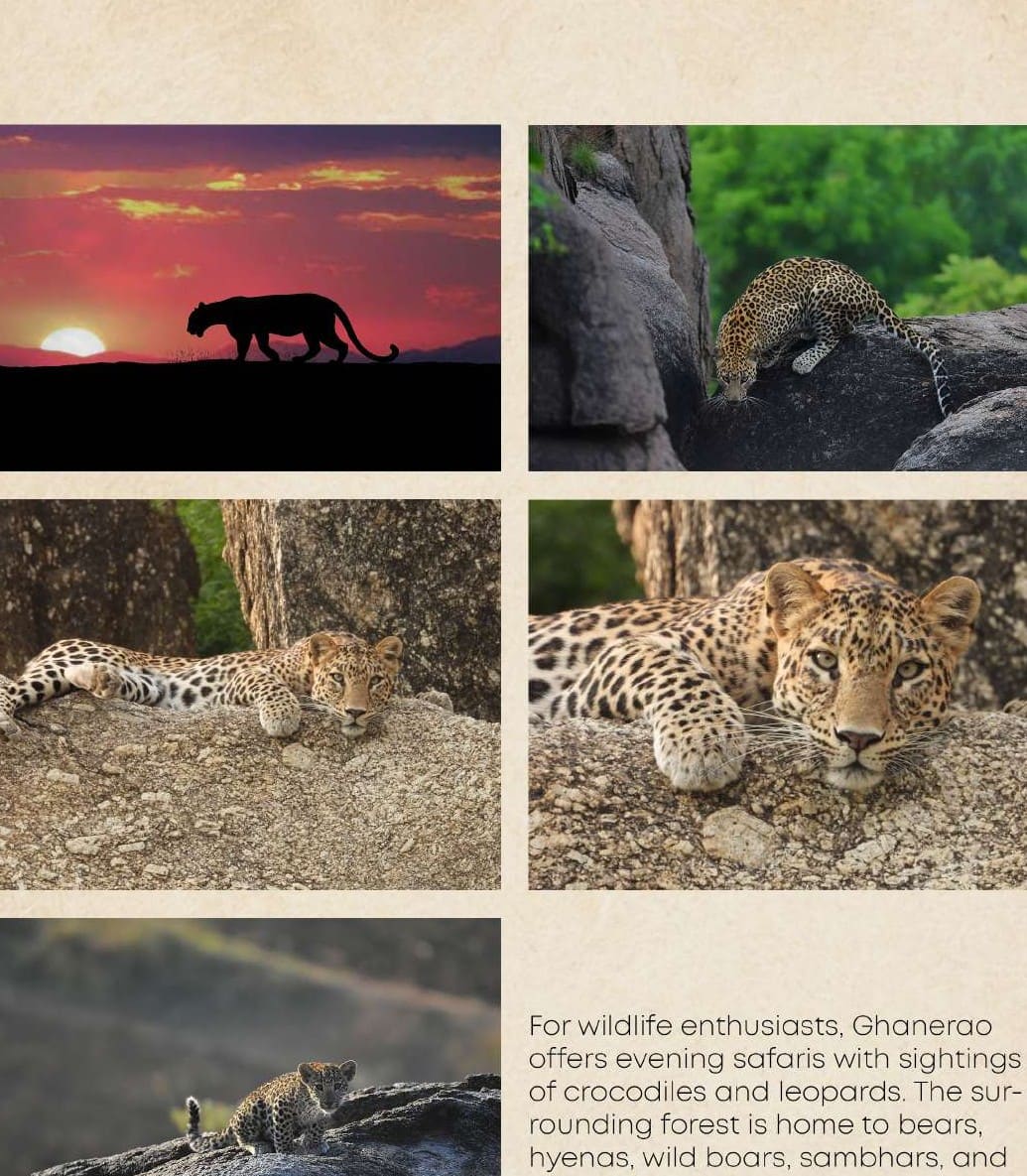
03Rajasthan Tourism describes Jawai as a water and wildlife landscape associated with migratory birds, leopards and crocodiles. Any safari remains a natural experience; sightings can never be guaranteed.
WHEN TO COME
Generally the mildest period for touring Rajasthan, with cooler evenings and mornings.
Hot-weather travel rewards an unhurried plan, early starts and time in the shade.
Monsoon rain can turn the Aravalli country greener; road and outdoor plans remain weather-dependent.
RESEARCH NOTE
The regional narrative above is based on government, UNESCO and academic sources. Property-specific services, timings and access should always be confirmed directly.