The Rawla
A Ministry of Tourism heritage study records Ghanerao's foundation in 1606. The family residence developed in layers rather than as a single formal hotel plan.
 Ghanerao Royal CastleA boutique heritage hotel · Estd. 1606Book your stay↗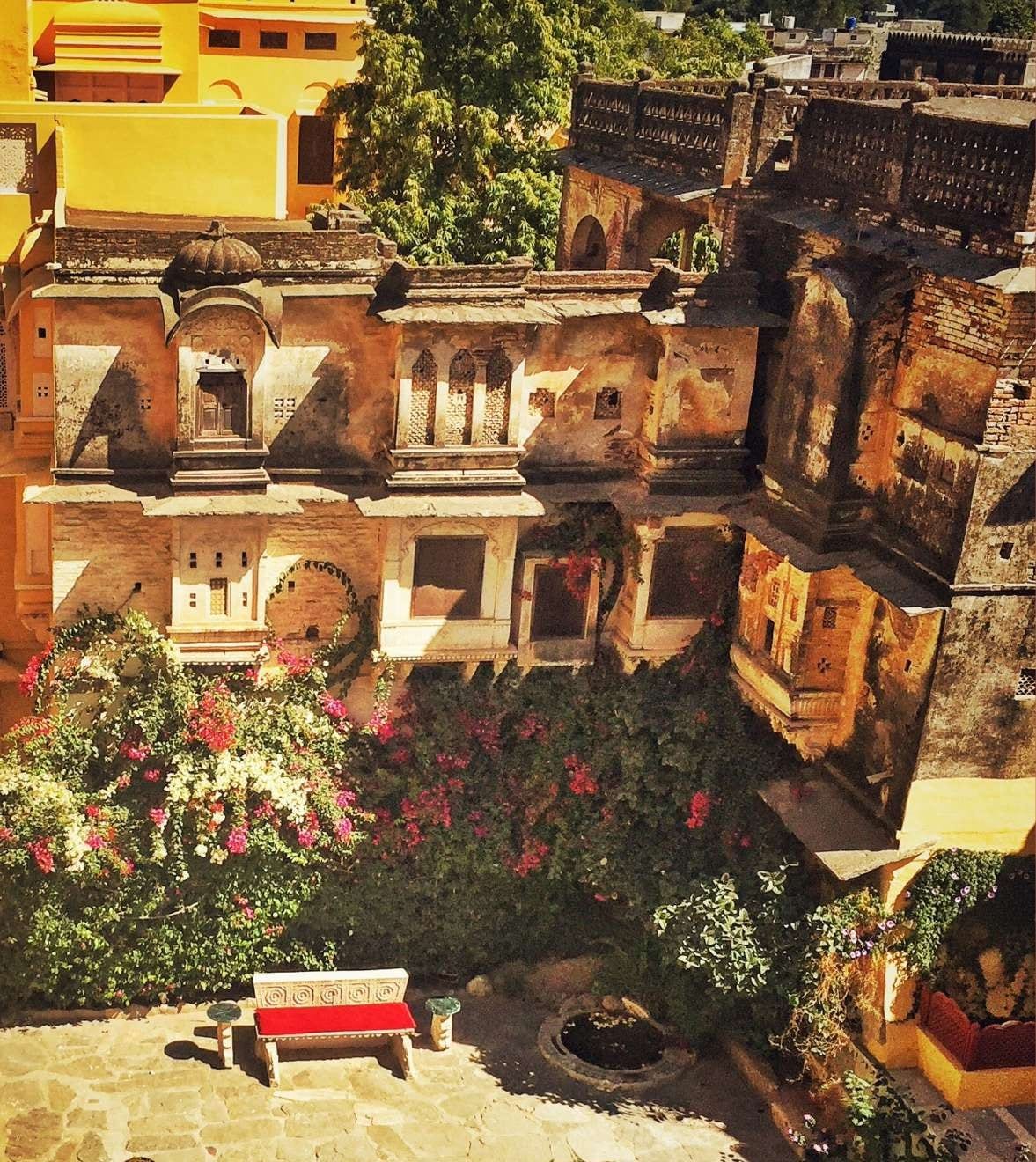
THE CASTLE
Built as a royal residence and still lived in as a family home, Ghanerao's character comes from time, memory and place.
ESTD. 1606
History is not confined to a display case here. It lives in the family’s stories, courtyards, rooms, temples, museum, festivals and art.
Walk slowly: the details of the house reveal themselves through stone, shade, objects and the rhythms of daily life.
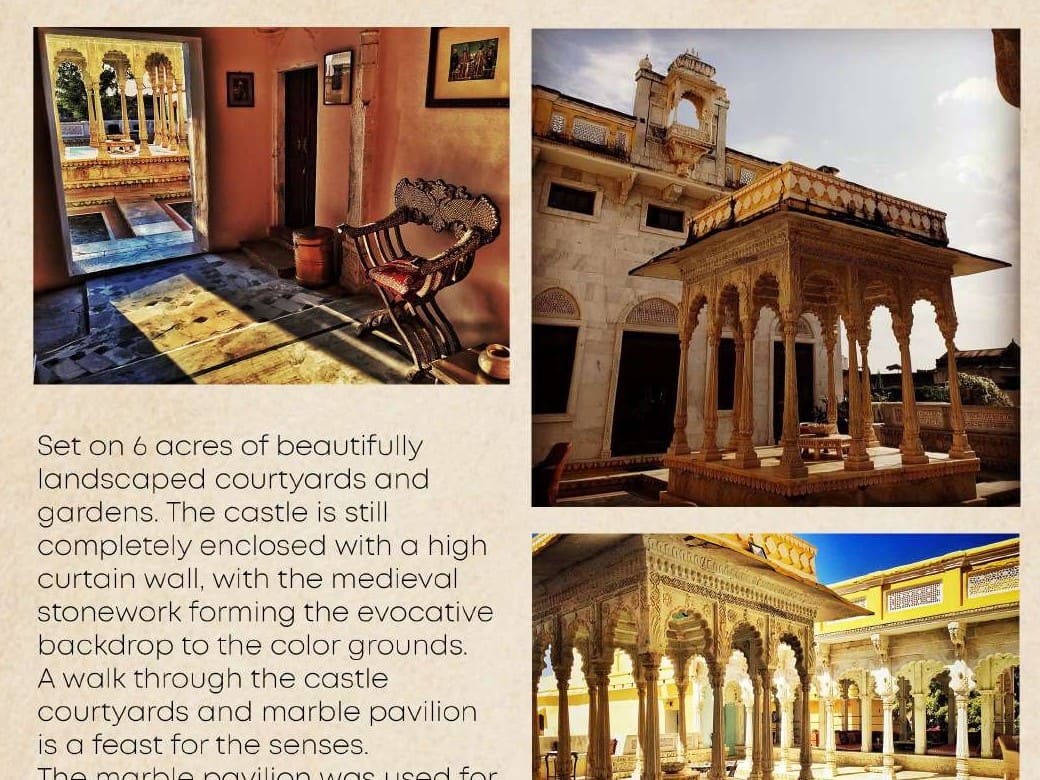
THE COURTYARDS & MARBLE PAVILION
A Ministry of Tourism heritage study records Ghanerao's foundation in 1606. The family residence developed in layers rather than as a single formal hotel plan.
Layered courtyards, stonework and the marble pavilion form the architectural heart of the guest experience.
Photographs, documents and family memory tell a story extending far beyond a conventional hotel history.
Three active temples continue the family's religious traditions. The early-19th-century mirrored room preserves painted glass miniatures and traces of earlier decoration.
The castle's story is inseparable from Ghanerao village, its old water structures and the wider cultural landscape.
The Ghanerao School of Art, festivals and local practices give the property cultural depth beyond accommodation alone.
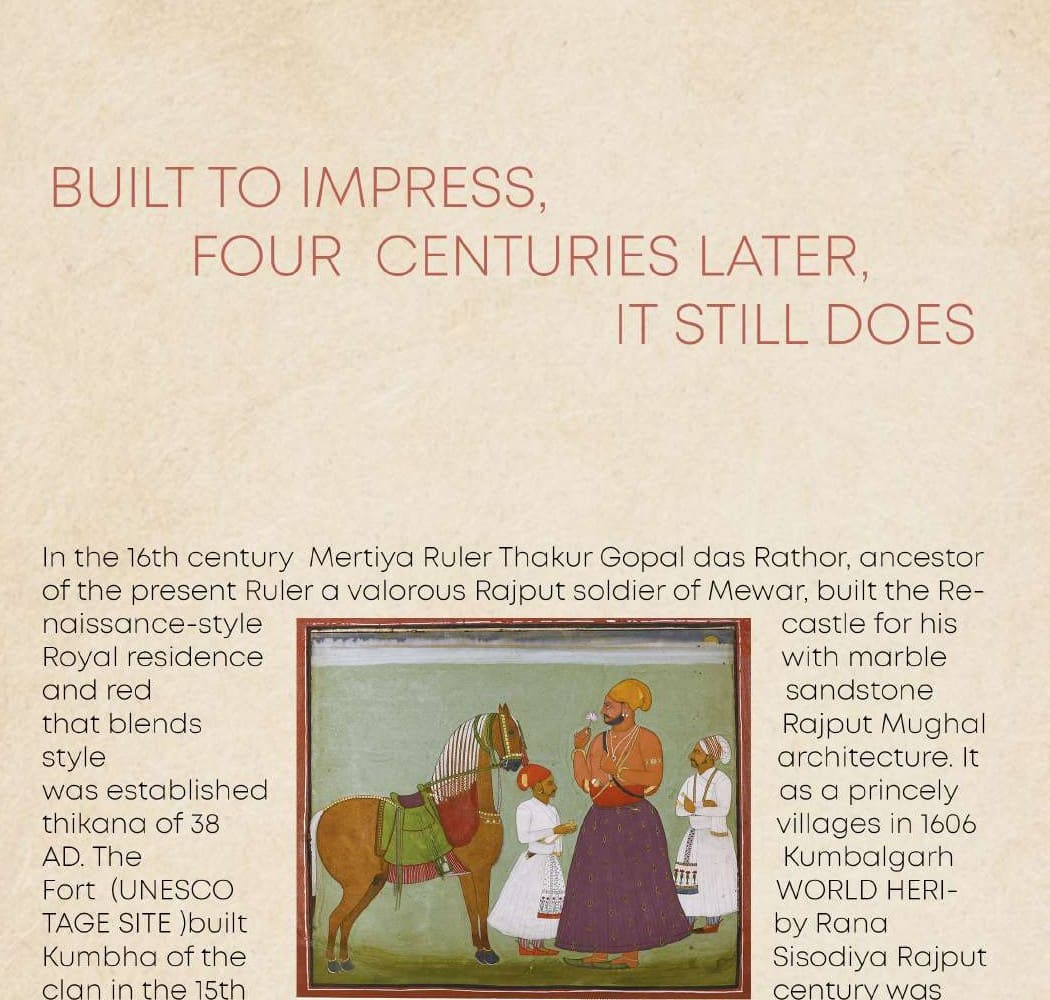
Family history and archival material preserved at Ghanerao.
HISTORY & TIMELINE
Dates, archival photographs, paintings and family stories connect the castle’s foundation in 1606 with the living house guests encounter today. The wider story continues through Ghanerao’s position between Mewar and Marwar.
Explore Ghanerao & the region →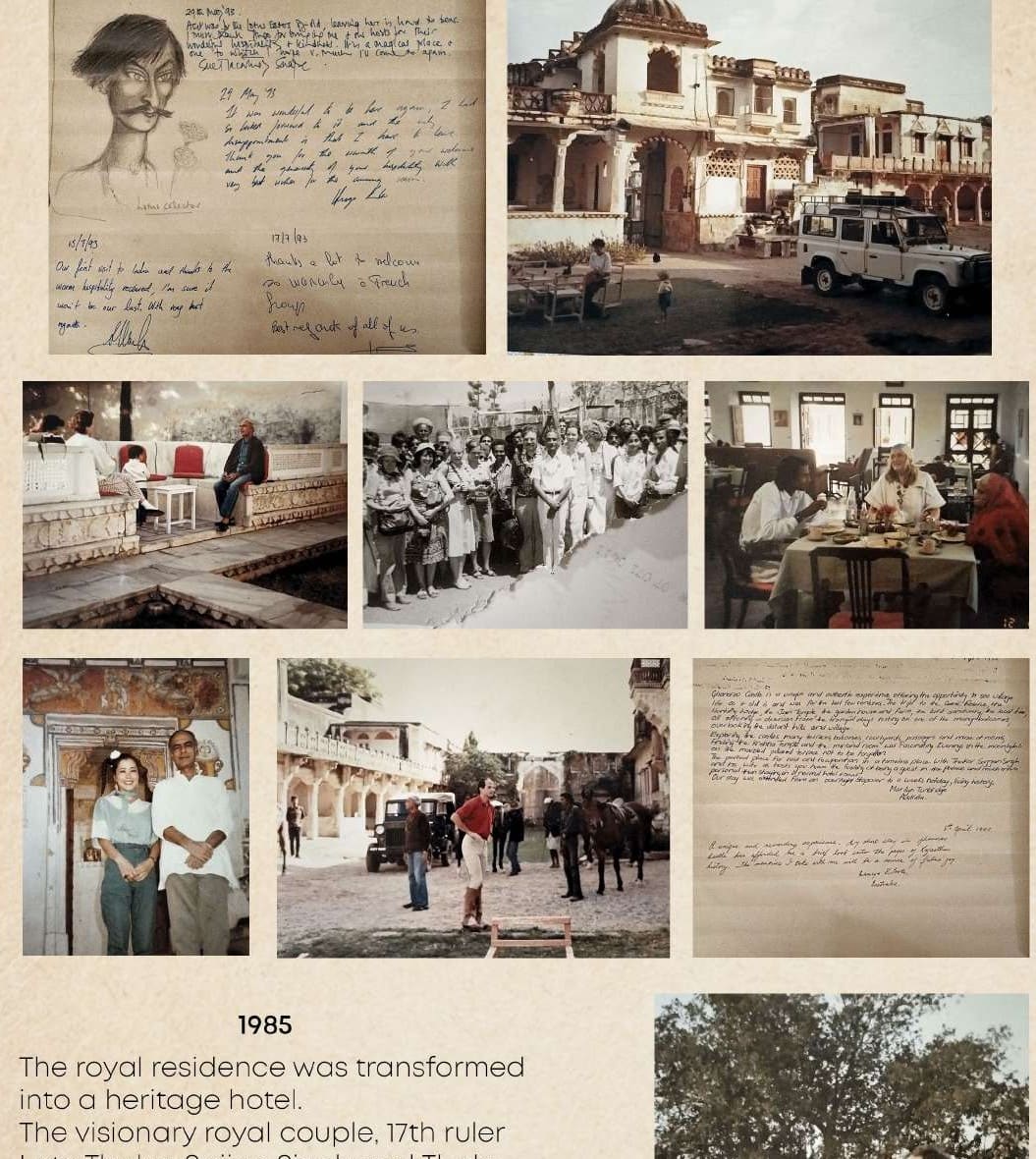
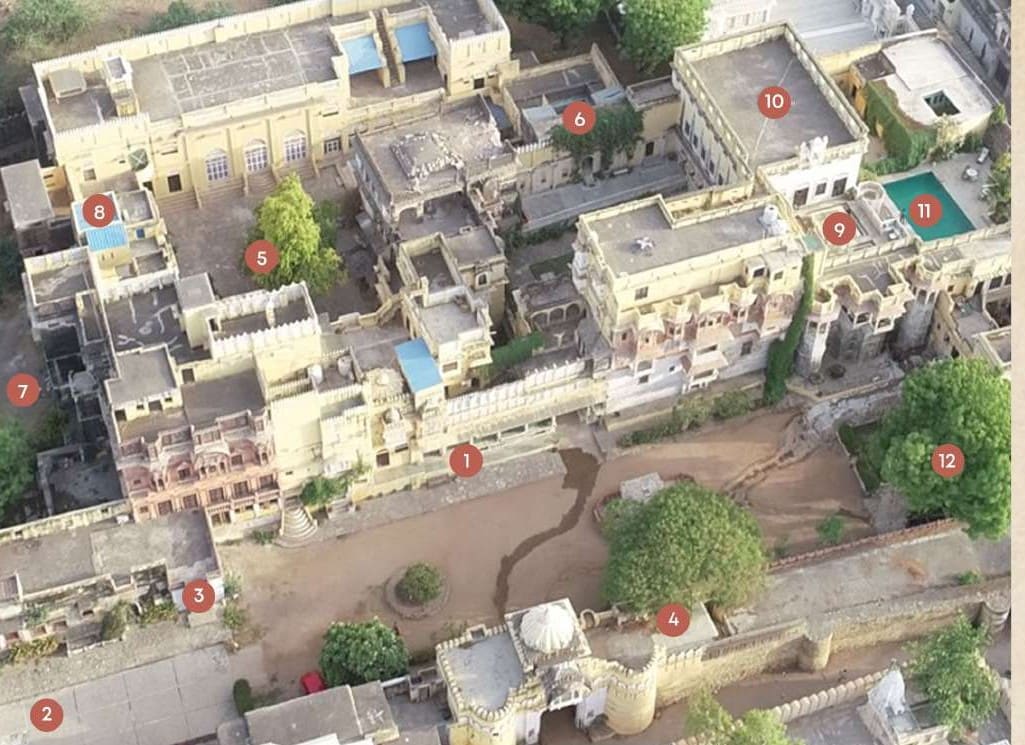
MAP OF THE CASTLE
Reception, museum, temples, kitchen garden, guest rooms, Badi Mahal and dining spaces unfold around the historic residence. Some areas remain private family spaces.